Area guides
The Golden Mile Area Guide: Beachside and Hillside Living Compared
On Marbella’s Golden Mile, two homes advertised near the same hotel can offer quite different days. One puts the promenade on your doorstep. The other might give you a quieter bedroom but a steeper walk home. Start with the journey you expect to make most.
Published · 10 min read
By Costa de Oro · Real-estate agency · Marbella & Costa del Sol

Put the front door on the map
Think of the Golden Mile as the stretch of Marbella between the town and Puerto Banús. In listings the name can reach quite a way inland. Bulevar Príncipe Alfonso de Hohenlohe, where Puente Romano gives its address, is a useful dividing line for a first search. A listing on the sea side of that road and one on the mountain side may look equally close to the water on a phone screen. Only one may let you get there without crossing the boulevard.
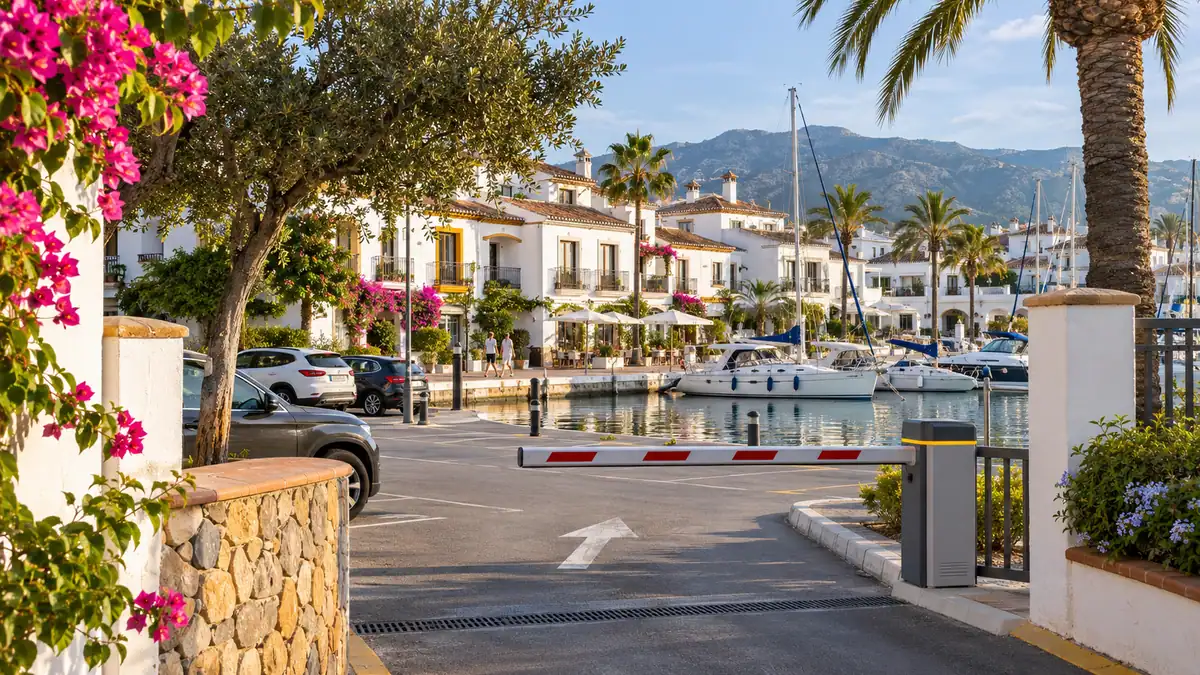
Ask for three pins before a viewing: the building entrance, the pedestrian gate residents can use, and the vehicle entrance. Add the point on the promenade where you want to arrive. An apartment at the seaward end of an estate can have its only usable gate at the uphill end. Similarly, the garage entrance may sit on a completely different street from the lobby. These details matter if one person takes the car and another walks.
For a comparison with higher residential streets, use Nagüeles and Sierra Blanca as separate stops. A reference to Nagüeles can mean the beach or the neighbourhood inland. If the agent sends a beach pin, ask for the actual road and building before arranging to meet there.
Walk to the part of the beach you will use
Casablanca and Nagüeles are separate beaches in Marbella’s municipal directory. Choose one entrance as your destination. Carry a beach bag and walk out of the building as a resident would. Count the doors that need a key, look for dropped kerbs and find the last ramp or steps down to the sand. A comfortable walk along the promenade says little about that final change of level.
At Playa de Nagüeles the council describes an assisted bathing service that needs advance booking and operates in season. Someone who relies on it should check arrangements for the dates of their stay, where assistance begins, and whether the return route works for them. A beach with an assisted bathing point can still be awkward to reach from an individual apartment.
Repeat the walk in reverse. At the end of the afternoon the sunny side of the street may be precisely the one you have to climb. For a family with a pushchair, an uninterrupted pavement can be worth more than a shorter route with steps. If a suggested shortcut crosses a hotel or a neighbouring estate, ask who can use it and what happens when that gate closes.
Find out what the extra height buys you
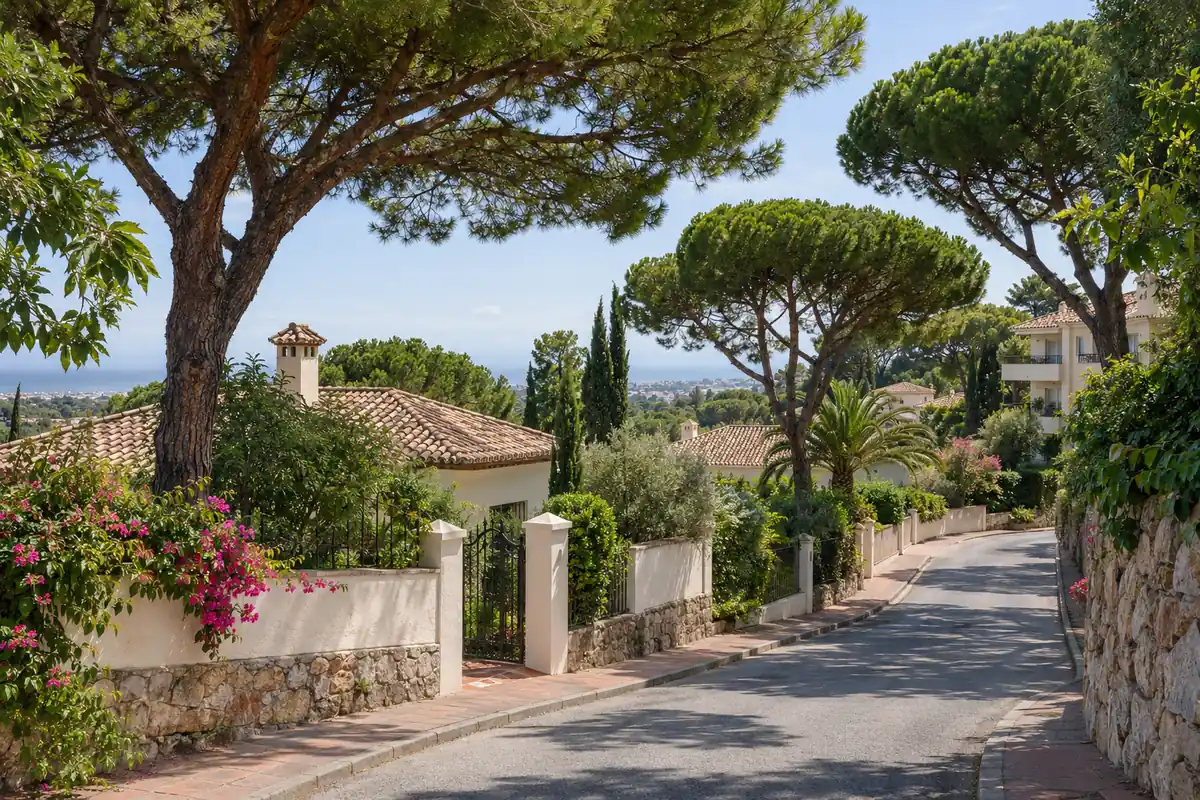
An inland address can offer separation from the promenade, more privacy from passers-by or a broader outlook. Test those benefits from the places you actually occupy. Sit where a dining chair would go. Does the sea remain visible under the awning? Can a neighbour on the next terrace see into the bedroom when the lights are on? An elevated camera angle can make a narrow sea view look much wider.
Go out through the garage as well. A steep ramp followed by a blind bend makes a difference if you drive a long vehicle or cycle to town. Try the turn using your own car where permitted. Check whether a visitor can stop on level ground while someone gets out, and whether the lift reaches that entrance. A level apartment can be a poor choice for somebody who cannot manage the last steps from the street.
Take the return route towards Marbella centre once and towards Puerto Banús once if both are part of your week. A central reservation or a required turn at the next junction can make the outward and homeward routes different. Write down the junction or crossing responsible. That observation remains useful long after a traffic app’s time estimate has changed.
Listen from the bedroom and inspect exposed finishes
A terrace facing the promenade gives you an immediate connection to the coast. It can also put passing conversations within earshot. An apartment a row back may hear deliveries instead. Ask for a short period with the music and air conditioning switched off. Open the bedroom windows, then close them. Judge whether you could sleep the way you prefer in that particular room.
Near the sea, inspect metal fixings, external shutters, balcony rails and the housing of the outdoor air-conditioning unit. Look for sticking mechanisms, blistered paint or corrosion around screws. Ask when the fittings were last serviced and who pays to repair them. A mark is a reason to ask for evidence or a professional opinion. It gives you very little basis for estimating the bill on sight.
On the hillside, pay particular attention to the surface above the patio and the land behind the building. Where would rainwater flow? Where does the terrace drain discharge? Ask to see maintenance records if you notice staining or recent paint in just one corner. Compare like with like: a sheltered inland ground floor and an exposed upper-floor coastal apartment have different maintenance priorities even when their internal layouts look identical.
Separate shared services from private extras
A concierge, garden, pool and garage can make a part-time home easier to use. Find out which services belong to this community of owners. A nearby hotel, restaurant or sports club is a useful landmark. Naming it in a brochure establishes no entitlement to its facilities. If a seller mentions a pass, ask the operator who holds it, whether it transfers and what the renewal conditions are.
Request the latest community budget, recent meeting minutes and information on approved extra contributions. Trace one tangible item through the papers, such as balcony rails or a pedestrian gate. Who organises maintenance? Has a contractor quoted? Is work approved, funded or still under discussion? That sequence tells you more about likely expenditure than the quarterly fee alone.
For a villa, list the jobs an apartment community might otherwise manage, including garden irrigation, gate repairs and exterior painting. Obtain estimates for the actual plot and equipment. For an apartment with a garden, ask about exclusive use and upkeep separately. The fact that only one household can reach a lawn does not by itself explain who may alter it or who must repair the wall beneath it.
What exactly are you buying at the water’s edge?
Ask your adviser to identify the property on two different sets of records. Spain’s Catastro can help locate the parcel and building on a map. A current Land Registry extract, the nota simple, gives information about the registered property, its ownership and registered rights or charges. A terrace, garden or parking space shown during a visit needs to be matched to the correct description. Bring a marked plan of what you were shown, especially if the agent used two separate gates.
For a home close to the shore, the environment ministry publishes mapping of the public maritime-terrestrial boundary. Have your adviser check the relevant stretch and any restrictions that could affect the home or work you intend to do. A map is a starting point for questions about a specific property. The apparent position of a garden wall or the line of sun loungers on the day gives you no reliable answer about the legal boundary. For a hillside home well away from the shore, spend that time checking the boundaries and permitted access relevant to its own plot.
For example, imagine that the apartment works for you only if you can enclose the terrace and use it in winter. Ask about planning requirements, existing permissions and community rules before making an offer dependent on the extra room. Take the same approach to a proposed gate from a private garden to the promenade. Sketch the change, show where it would sit and let the adviser establish what can actually be done. The layout next door might predate current rules or involve a different property.
Also decide what you would buy if no changes were possible. A sheltered dining area with space indoors for wet days may already meet the brief. Taking that fallback seriously helps you avoid paying for a future feature that nobody has yet confirmed. It also draws a fairer comparison with a hillside apartment selling with a covered terrace you can inspect and use as it stands.
Compare two front doors on the same afternoon
Imagine a couple who walk after dinner and have a relative who uses a walking stick. They shortlist a beachside apartment near Casablanca and a hillside home with a larger terrace. Their first outing should include the relative’s likely journey from the drop-off point to a chair inside. On the second, they walk from both homes to the promenade and back after sunset. This makes it clear whether they would use the larger terrace more often than the easier evening walk.
Photograph the point that settled each question, with permission. A photo of the kerb between the entrance and crossing may be more useful later than another sea view. Keep a short list of things you have tried and a separate list of things someone has told you. Get important claims about parking, access or shared services confirmed before relying on them.
- Try the beach exit with the keys residents receive and identify a public alternative.
- Stand on the terrace at the time you normally eat outside and listen in the quietest bedroom.
- Walk from an actual parking space to the lift, including every fire door and threshold.
- Compare the latest regular charges and approved extra work over the same period for both homes.
Turn your preferred routine into a viewing brief
If the sea is the reason for moving, define what access means to you. It might be getting to the promenade before breakfast without crossing the boulevard, swimming from a particular beach, or returning after dark on a well-lit route. These requirements point to different streets. Give your agent one destination and one constraint they can test at the door.
If you prefer the hillside, describe the benefit in equally concrete terms. A private dining terrace with afternoon light, an easy garage approach and a reasonable trip to town are more useful instructions than asking for the best views. Put any essential step-free route or guest parking arrangement at the top of the brief. Ask Costa de Oro to show you one home on each side that meets those essentials, so the viewing can settle the remaining choice.
Common questions
Is Playa de Nagüeles the same place as the residential area of Nagüeles?
The beach is on the coast. Homes described as being in residential Nagüeles can be inland. Ask for the pedestrian gate and plot address before using a beach map to estimate your daily walk.
Can I count on using hotel facilities if I buy nearby?
Check with the operator and have any claimed transferable right reviewed with the sale documents. Restaurant reservations, sports memberships, hotel guest benefits and residents’ community facilities can all have different conditions.
Which side works better if I want to leave the car at home?
Choose the address that connects on foot to your actual destinations. Test the return from a food shop as well as the walk to the sea. A beachside location can solve one trip while leaving the other dependent on a car.