Area guides
La Cala Golf Area Guide: Resort Living Versus a Coastal Address
La Cala Golf offers an inland setting shaped by golf courses and surrounding hills. It is a different proposition from living in coastal La Cala de Mijas. Before choosing an apartment, townhouse or villa, compare everyday journeys, private-community responsibilities and the facilities you can actually use under the terms offered.
Published · 10 min read
By Costa de Oro · Real-estate agency · Marbella & Costa del Sol

Distinguish La Cala Golf from La Cala and Mijas Golf
La Cala Golf is an inland resort setting within Mijas. Coastal La Cala de Mijas is a different location, with a different relationship to the beach and everyday services. A listing using the words ‘La Cala’ should therefore be placed on a map before you interpret its lifestyle claims. Establish the actual development, entrance and approach road rather than assuming a village or beachfront address.
It is also distinct from Mijas Golf. The municipal golf directory identifies La Cala Resort’s America, Asia and Europa courses separately from the Mijas Golf setting associated with Los Lagos and Los Olivos. La Noria is another separate golf reference. These names should not be treated as interchangeable when comparing properties, directions or the surroundings of a proposed home.
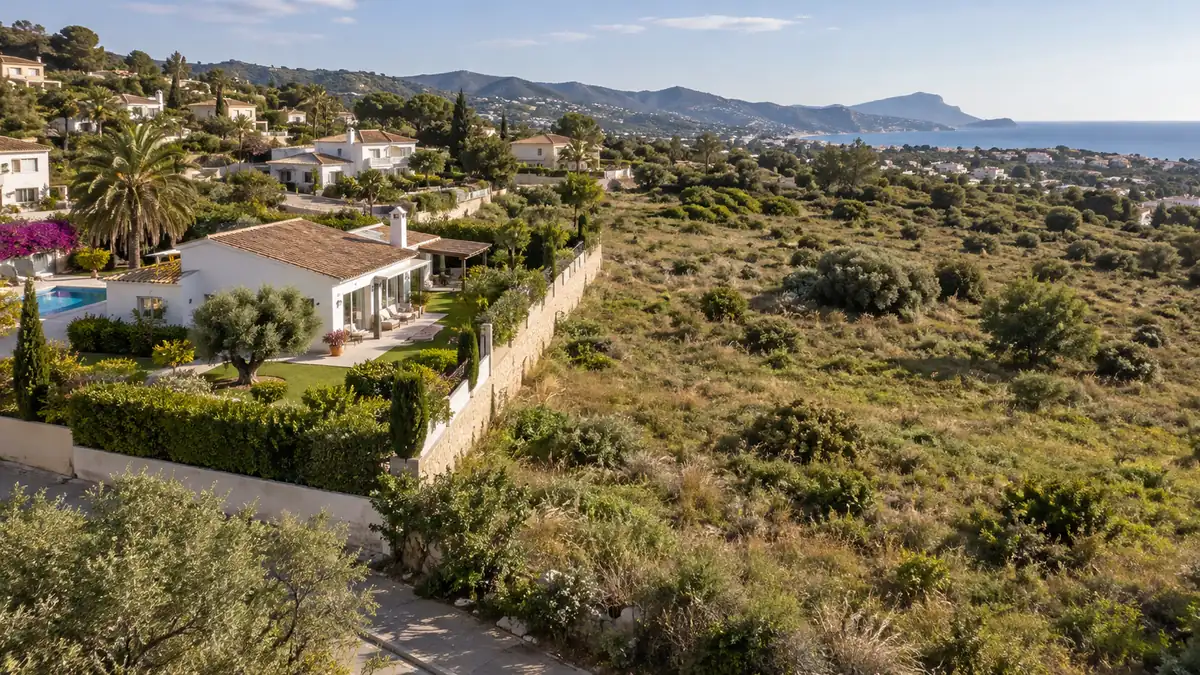
The appeal of La Cala Golf is the relationship between homes, open golf landscapes and inland hills. That setting can suit buyers who value space around them and are comfortable planning journeys by car. It does not automatically provide the convenience of stepping from home into a coastal shopping street. Decide which setting supports your normal week before comparing finishes or terrace sizes.
Mark several destinations separately: the resort facilities you would use, a regular grocery shop, the beach, healthcare and work or school if relevant. Follow the route from the property entrance, not from a general resort marker. Large developments and different phases can add meaningful differences to the journey even where two listings carry the same location name.
Test an ordinary week before choosing resort living
A resort visit can make daily life appear simpler than it will be as an owner. During a short stay, you may eat on site and have few errands. For a longer stay, groceries, appointments, deliveries and social plans become part of the routine. Write down those journeys and test the important ones from the exact property before deciding that the location works for you.
Do not treat published or advertised driving times as fixed promises. The starting point, destination, traffic and route all matter. Drive to the coast and back at a time that resembles your intended use. Check the access road after dark if you expect regular evening outings. A journey that feels pleasant occasionally can become less attractive when repeated several times a day.
If you hope to live without a car, obtain a practical plan for every essential journey. Verify current public transport, taxi arrangements or any shuttle being offered; do not assume that a resort operates a resident service because it has a hotel. Ask who can use a service, when it runs and what it costs. The private community may have different arrangements from the hotel.
Consider how the household would cope if the usual driver were unavailable. Could another person manage appointments, shopping and visitors comfortably? This is particularly relevant for a retirement home or a property used by relatives. The point is not to reject an inland address, but to choose it with a realistic understanding of the mobility it requires.
Separate resort facilities from ownership rights
The resort operator describes three 18-hole courses, America, Asia and Europa, together with hotel, spa, restaurants and sporting facilities. These help define the setting. They should not be read as a list of services included in every property purchase. Ownership of an apartment overlooking a course does not itself establish membership, discounted bookings or unrestricted access.
If a seller or developer offers a golf or leisure benefit, request the terms in writing. Check who provides it, who may use it, its duration, booking conditions and whether it transfers on resale. A temporary promotional package has a different value from a continuing contractual right. Ask about exclusions and renewal costs rather than relying on the headline description.
The operator allows non-residents to book certain resort services, but bookings remain subject to the relevant conditions and availability. If regular use is central to your plans, investigate the service directly. Course maintenance, events and operational arrangements can affect access. A pleasant visit to a spa or restaurant is useful experience, not evidence of guaranteed availability throughout ownership.
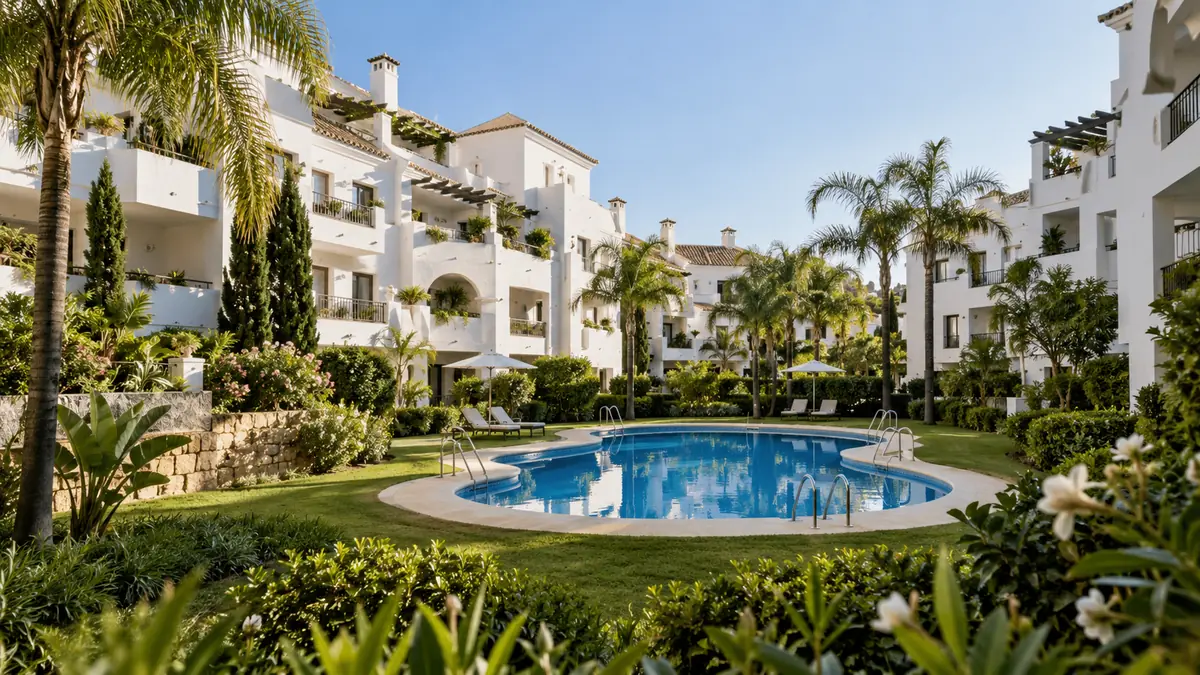
Distinguish resort facilities from those belonging to your residential community. A pool shown in an advertisement may serve one phase, while another nearby pool belongs to the hotel or a different complex. Ask to see the facilities attached to the property and read the rules that apply. This avoids paying for an expectation that the legal and practical arrangements do not support.
Compare apartments, townhouses and villas by daily use
For an apartment, begin with the route from the parking space to the front door. Check whether the lift serves both levels, whether there are intermediate steps and how far you must walk through the development. Then inspect storage and the relationship between living space and terrace. A generous outdoor area is most useful when it suits the way you expect to spend time.
A townhouse may offer more separation between rooms, but internal stairs can influence daily life. Locate the bedroom, bathroom, kitchen and outdoor space you would use most often. Consider whether carrying shopping or laundry between levels will remain comfortable. A roof terrace and a garden beside the living room are not equivalent features, even if both add to the advertised outdoor area.
With a villa, investigate the condition and maintenance of the garden, pool, exterior surfaces and access. Ask who currently looks after the property and how contractors enter when the owner is away. A larger plot can provide privacy while increasing responsibility. Obtain property-specific information and quotations rather than assuming that resort surroundings mean the resort maintains private homes.
Across all types, inspect orientation, winter daylight, ventilation and exposure. A terrace looking across a course may receive different light from the main living room. Visit at another time if sunlight is a deciding factor. Have a suitable professional assess condition concerns, especially where retaining structures, drainage or altered spaces need closer examination.
Inspect a golf-side outlook as carefully as any other boundary
A golf course can create an attractive open outlook, but the details of the boundary matter. Establish where the private property ends and what lies beyond it. Do not assume that neighbouring grass forms part of the garden or that a course path is a public walking route. Ask your adviser to clarify rights and boundaries where the setting makes them easy to confuse.
Spend time outside listening and observing. Course maintenance, players, access routes and neighbouring terraces may affect the experience at different times. If a home lies close to play, ask about the position of the hole and any history of stray balls, then seek appropriate technical or insurance advice where relevant. Do not infer the level of exposure from a wide-angle photograph.
The current view also deserves a planning check. Identify adjoining plots and ask your adviser to investigate their planning status and any relevant approved proposals. Open land beyond a terrace should not be described as permanently protected merely because nothing is built there today. Equally, the existence of a planning document does not establish that a particular project is about to start.
For homes near planted slopes or more natural land, ask a surveyor about drainage, maintenance access and any property-specific issues arising from the terrain. The purpose is to assess the actual site, not to attach a blanket warning to every resort home. Compare findings, proposed work and the responsibilities of the owner or community before deciding how the setting affects your budget.
Check the phase, recurring costs and practical services
A resort name can cover several residential phases with different owners’ communities and arrangements. Ask which community the property belongs to and whether there is a wider structure or a separate garage contribution. Request current budgets, recent minutes, approved extraordinary payments and an explanation of what each fee covers. Compare the documented obligations, not a single approximate monthly figure.
For a newer phase, establish the position of the surrounding roads, shared areas and any remaining works. Ask the relevant advisers to check the planning and completion documents applicable to that phase, including responsibilities for infrastructure where necessary. Do not assume that every part of a wider development has the same completion status because nearby homes are already occupied.
Obtain an address-specific broadband check and test mobile coverage in the property. The resort’s information about Wi-Fi in hotel or public areas does not prove that a private apartment has the connection you need for work. Ask about installation lead times, available service and any restrictions affecting equipment, especially if reliable connectivity is essential to your purchase.
Plan for absences as well as occupation. Decide who will hold keys, inspect the home, deal with deliveries and respond to maintenance problems. Clarify whether any quoted management service is optional and what it includes. If you intend to let the property, investigate the relevant permissions and community rules before relying on rental income to meet the running costs.
Compare the resort and the coast using the same priorities
Consider a hypothetical buyer choosing between a resort townhouse and a smaller coastal apartment. The townhouse may offer the preferred outdoor space and golf setting, while the apartment may make regular errands and beach walks simpler. The decision depends on which benefit will be used more often. Comparing only bedrooms or terrace area misses the practical value of the location.
Write down a normal week and a less convenient one: a day without the car, a visiting relative, a work deadline or a maintenance appointment. Ask how each property would function. This makes hidden dependencies visible without assuming that everyone should prefer the coast. A buyer who enjoys driving and values the inland setting may reasonably choose the resort after completing these checks.
Before making an offer, resolve the questions that could change the decision: exact phase, parking, facilities included, recurring obligations, connectivity and building condition. Costa de Oro can help compare the available addresses and arrange focused visits. Legal and technical advisers should confirm the rights, planning position and condition attached to the property you choose.
- Confirm that the listing is La Cala Golf rather than coastal La Cala or Mijas Golf.
- Test daily journeys from the actual entrance and verify any transport service offered.
- Separate resort bookings, promotional benefits and private-community facilities.
- Review the phase’s documents, costs, planned works and neighbouring land.
- Check winter comfort, connectivity and arrangements for maintaining an empty home.
Common questions
Is La Cala Golf the same area as Mijas Golf?
No. La Cala Resort has the America, Asia and Europa courses. Mijas Golf is a separate setting associated with Los Lagos and Los Olivos. Confirm the exact address before comparing properties or arranging viewings.
Does buying a home at La Cala Golf include golf membership?
Do not assume so. Any membership, discount or leisure package should be checked against written terms covering eligibility, duration, bookings, renewal and transfer. The view from the property is not evidence of an included benefit.
Is La Cala Golf suitable for full-time living?
It can be, if its inland location and the individual home fit your routine. Test shopping, healthcare, work and social journeys, then check connectivity, winter comfort and ongoing costs. Resort facilities do not replace checking the everyday services your household needs.