Buying
Snagging a New-Build Home: How to Record Defects Before Acceptance
Agree when you can inspect your new-build home, then record each issue with an exact location, a photo and an agreed next step. Before signing any handover document, check which items are open and what the document says about acceptance.
Published · 8 min read
By Costa de Oro · Real-estate agency · Marbella & Costa del Sol
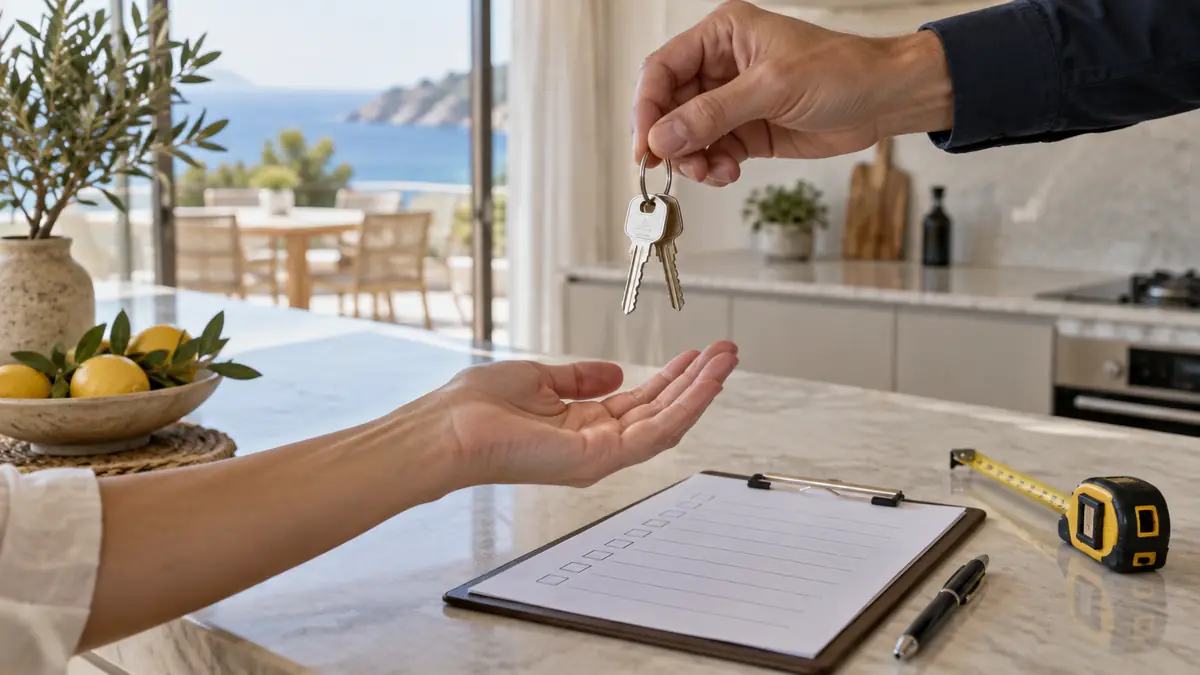
Agree access and bring the documents you bought against
Ask the developer for the earliest permitted inspection appointment, which areas you can access and whether the installations will be ready to demonstrate. Arrange access for an independent inspector if the project permits it. Ask whether the visit includes the terrace, storage room and parking bay. A request for access is easier to resolve before travel, removals and the notary appointment are fixed.
Bring the signed plans, specification, approved variations and annex descriptions. Mark any difference you can actually observe and record which document you used for the comparison. Renderings can help explain a question about the layout. A dated contract schedule gives the professional something specific to compare with the home.
If you need to inspect remotely, agree who will attend, how they will report and whether they have authority to sign anything. A video tour can reveal a problem but often misses edges, surface damage or how a window closes. Ask for still photos and a list of what could not be checked. Give your lawyer any proposed handover wording before the visit.
Work through the home in the same order every time
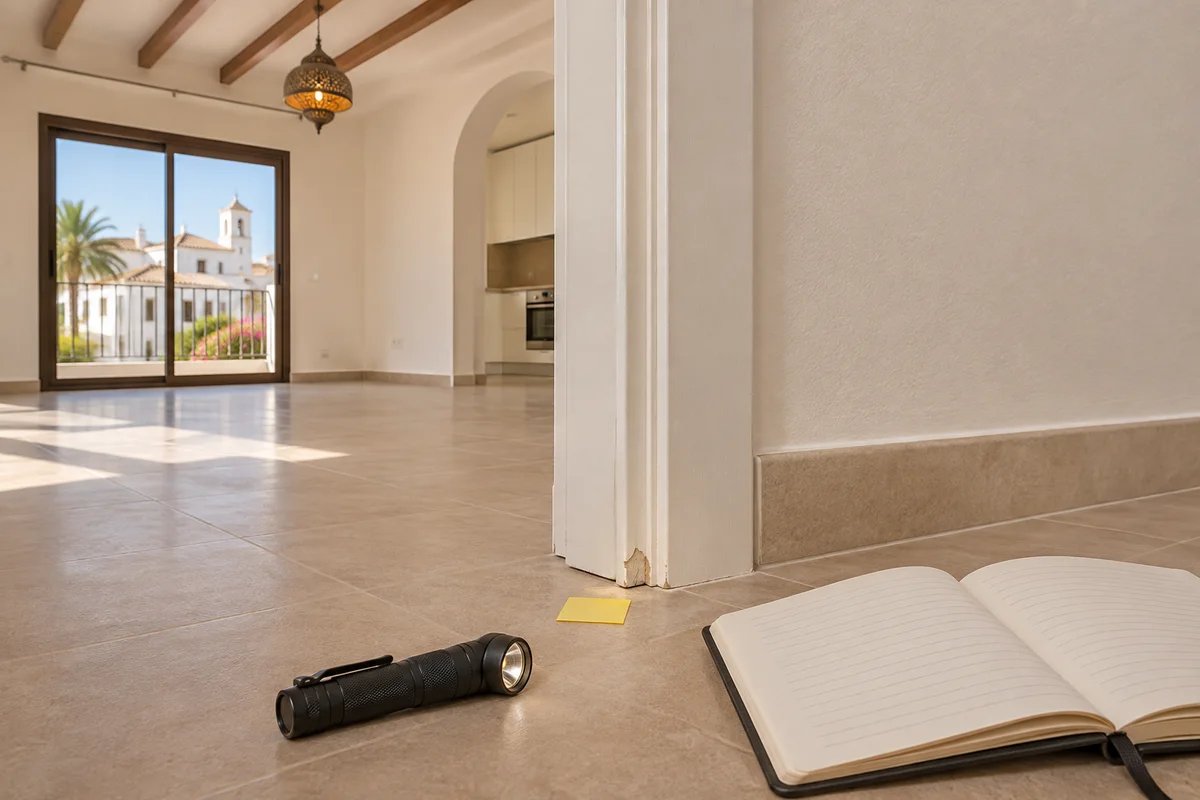
Start at the front door and move through each room consistently. Open and close doors and windows that you can operate safely, check alignment and visible damage, and look for differences between the agreed finishes and the installed ones. Compare the inside and outside of each door frame. Look from normal viewing positions and photograph the area in good light.
Ask the developer to demonstrate installed systems and fittings after services have been commissioned. Record whether you saw each item working. Where water and electricity can be used safely and you have permission, check simple operation with the representative present. Ask a technician to investigate wiring, pressure, ventilation, drainage and anything requiring specialist measurements. Record utilities or equipment that are unavailable as “not tested” and ask when you can return.
Allow time for the terrace and access route. Look at visible drainage outlets, thresholds and seals. Photograph staining or water marks without naming a cause you cannot establish. Check the parking bay and storage room against the plan and record shared access issues separately from the private home. If an area is closed, add it to the follow-up list with the reason.
If the visit is short, cover the spaces and functions you would find hardest to revisit. Take the overview photographs before taking close-ups so you can locate each item later. Save a list of closed, inaccessible and untested spaces. It lets a second visitor pick up where you left off and avoids relying on a memory of what was open on the day.
Write a record that someone else can find and act on
Give each finding an ID. Record the unit, room, exact position, date, symptom, impact, plan or specification reference if relevant, and one overview photo plus a close-up. Use a clear naming convention that includes the ID. Describe what a contractor would see and how to reproduce it. Keep the original files and send an annotated copy when useful.
For example, “B07, bedroom 2, door closes only when lifted at the handle” tells someone where to look and how to reproduce the issue. Add the date, a short video where safe, and a photograph of the frame. If the agreed specification requires a particular fitting, quote its reference and show what was installed. “Bad door” leaves the action unclear, while naming a fault in the hinges may diagnose something you have yet to check.
Keep one list with the developer or after-sales team. Give each item an owner, response or repair target, and status. Useful statuses include open, awaiting inspection, repair proposed and verified closed. Record the reason if an item is disputed. Save a dated version each time the list is shared so that changes can be traced.
Separate the findings that affect use
A small mark on a painted wall and a window that cannot be secured require different responses. Label each observation with its practical effect: cosmetic, functional, possible safety or suitability issue, or requires professional assessment. Use the classifications to decide who needs to attend and how quickly the item needs a response.
If you see active water entry, a loose guard or another serious concern, notify the responsible person promptly and keep clear of the affected area. Photograph only from a safe position. Have a qualified specialist assess the cause, extent and proposed remedy. Ask your lawyer how a significant issue affects the proposed handover, rather than deciding from an inspection indicator alone.
A difference from the sales specification can matter even when the fitted item works. Record the agreed item and evidence of the substitution. Ask what the developer proposes and whether an approved variation already covers the change. If a shared element is involved, ask who is responsible for responding and whether the building administrator should receive a copy.
Read what the handover form asks you to accept
Spain’s Building Act distinguishes the builder’s formal delivery of the works to the developer from a buyer accepting keys or signing a purchase or handover document. Article 6 governs the former. Ask your lawyer to identify what each paper in your own transaction does and whether the developer’s document includes statements about conformity, unresolved items or settlement of claims.
Ask for an acknowledged copy of the snag list and a written plan for repairs, access and retesting. If the developer uses a portal, keep your submitted list and the acknowledgement. Where items remain open, discuss with your lawyer whether and how they should be recorded in the handover paperwork. Review contractual signing, payment and notice obligations before changing any of those arrangements.
Arrange a follow-up for items that cannot be checked yet. For a remedied door or window, operate it again under normal conditions where safe. For water entry, ask a specialist how to verify the repair and what conditions are needed. Record the date and evidence before marking an item closed.
Know which deadlines to verify after handover
Article 17 of the Building Act addresses liability for certain material damage. It distinguishes one year for execution defects affecting finishing work, for which the builder responds, three years for relevant defects affecting habitability, and ten years for qualifying structural damage. The periods run from the formal reception of the works without reservations or from correction of those reservations as provided by the law. They do not automatically start on the day you collect your keys.
Article 18 sets a separate two-year period to bring actions under article 17 from when the damage occurs, without prejudice to actions for breach of contract. Ask your lawyer which route, dates and notice requirements apply. Do this promptly if damage is significant or a deadline might be approaching. Keep your snagging record as evidence of what you saw and when, alongside any independent assessment.
If something develops after moving in, add a dated entry with its conditions and contact the appropriate person. Ask for the relevant reception date and building documentation as available. Record maintenance and repairs so that a professional can understand what changed since the first inspection.
What to have ready before the appointment
Keep the signed specification, the snag list and the developer’s latest response together. Share them with your inspector and lawyer before the handover. Use a separate page for questions about the final instalment, the signing date or the occupation documents.
- Confirm access, time available and services that can be demonstrated.
- Record each issue with an ID, exact location and clear evidence.
- Mark serious or untested items for professional review.
- Ask who will repair each item, by when and how you can verify it.
- Read any declaration about acceptance or settlement before signing.
Common questions
Can I inspect before getting the keys?
Ask about the appointment arrangements and what access is agreed for your purchase. Confirm whether an inspector can attend and whether untested systems can be demonstrated later.
Can I refuse to sign if there are defects?
Your rights and risks depend on the contract, applicable law and significance of the defects. Have the evidence and the proposed document checked before refusing, withholding a payment or signing an acceptance.
Does a snag list cover hidden issues found later?
A snag list records observations at a particular time. Keep it and create a dated record for issues that appear later. Ask which contractual or legal process applies and act within the relevant time limits.